If This Time Is (NOT) Different
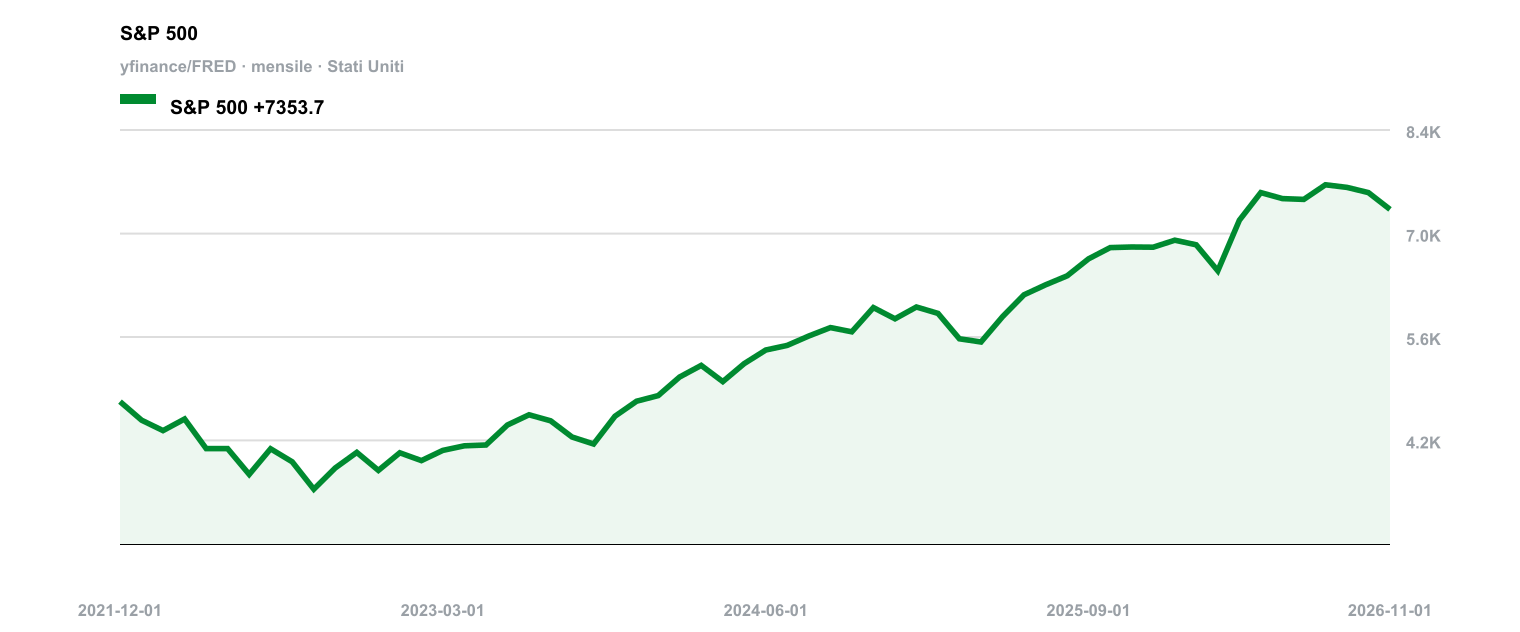
On Thursday, November 5, the S&P 500 lost 4.36 percent in a single session, closing at 7,353.73, as AI-linked companies collapsed. And yet this time, we had been told, was different. In April 2026, JPMorgan's Jamie Dimon wrote in his annual shareholder letter that "investment in AI is not a speculative bubble; rather, it will deliver significant benefits." In the same letter he admitted he cannot predict "the ultimate winners and losers": a technology can be right and still ruin whoever holds the wrong share of it. In May 2026, Goldman Sachs's Pierfrancesco Mei observed that market breadth was "far less narrow" than in 1999-2000. On Thursday, breadth showed itself: all 11 sectors of the S&P 500 fell. In May 2026, Morgan Stanley's Michael Wilson dispatched the valuation question in a single sentence, "this is an earnings story, not a multiple expansion one," and raised his year-end S&P 500 target to 8,000. In July 2026, Goldman Sachs's Dominic Wilson and Vickie Chang wrote that comparisons with the late 1990s "still look more reassuring than not." In October 2026, Morgan Stanley co-president Dan Simkowitz declared, with enviable confidence: "There is no AI bubble."
It is not the first time that eminent armchair-finance luminaries have told us "all is well" shortly before a financial bubble burst. In October 1929, Irving Fisher, one of the most authoritative American economists of his day, told The New York Times that stock prices had reached "what looks like a permanently high plateau." A few weeks later, Wall Street crashed. Fisher was no charlatan, and that is the point: every bubble has its Fisher, a serious person who looks at the same charts as everyone else and concludes there is nothing to fear.
The script has been repeated many times since. In 1999, the book Dow 36,000, by J. Glassman and K. Hassett, argued that stock markets were trading at about a third of their true value. Months later they began a collapse that, by 2002, had cost the Nasdaq more than 75 percent from its March 2000 peak. In October 2005, Ben Bernanke, then chairman of the White House Council of Economic Advisers and, from February 2006, of the Federal Reserve, told Congress, literally, that the rise in house prices largely reflected strong economic fundamentals. Two years later, the subprime mortgage crisis began.
Numbers, on the other hand, rarely lie. In October 2026, a Bank of America team led by Michael Hartnett calculated that the ten largest AI-linked stocks make up 42 percent of the market, whereas past bubbles, from the 1920s to 2000, peaked when their leaders were worth between 36 and 44 percent. Another team at the bank notes that Big Tech's infrastructure spending has tripled, to one trillion dollars. In late September 2026 it was reported that Goldman Sachs, which does not talk of a bubble, had calculated with Ryan Hammond that Amazon, Oracle and Microsoft will need roughly $300 billion in annual AI revenue, in the coming years, just to break even on their investments. And in May 2026, Evercore ISI's Julian Emanuel said the rally "feels like 1999": relatives, friends, doctors and Uber drivers are all talking about AI and tech stocks.
Whoever says "no bubble" today may be right. But the authority of those offering reassurance has never been a market indicator: it is found identical in every bubble, just before it bursts. Unless, of course, this time is different…
References
Yahoo Finance, 11/05/2026
Stock market today: Dow plunges 1,800 points, Nasdaq enters correction in AI trade meltdown
Reuters, 11/05/2026
Trading Day: A November 5 market bonfire
JPMorgan Chase & Co., 2026
Jamie Dimon's Letter to Shareholders, Annual Report 2025
Fortune, 05/18/2026
AI is eating the market and Wall Street strategists have bubble brain
Yahoo Finance, 2026
AI is eating the market and Wall Street strategists have bubble brain (Emanuel, Evercore ISI)
Goldman Sachs Research, 07/10/2026
Are US Stock Market Valuations Outpacing Fundamentals?
Calcalist, 10/15/2026
Morgan Stanley co-president: "There is no AI bubble"
The State of AI, 10/16/2026
Bank of America Sees Bust Warning Signs in the AI Boom
Yahoo Finance, 09/28/2026
Goldman Sachs has a blunt message for AI stock investors
Time, 09/03/2014
Stock market high 1929
WealthManagement, 11/02/2021
Author of Dow 36,000 on lessons learned since the 1999 prediction
NBC News, 2005
Bernanke: There's no housing bubble to go bust
Key takeaways
- Every bubble has authoritative voices declaring "no bubble" shortly before the burst.
- Fisher in 1929, Dow 36,000 in 1999 and Bernanke in 2005 all reassured shortly before major market declines.
- Reassurance is not a market indicator: concentration and spending figures say more than the confidence of those speaking.