Is it time to buy US bonds?
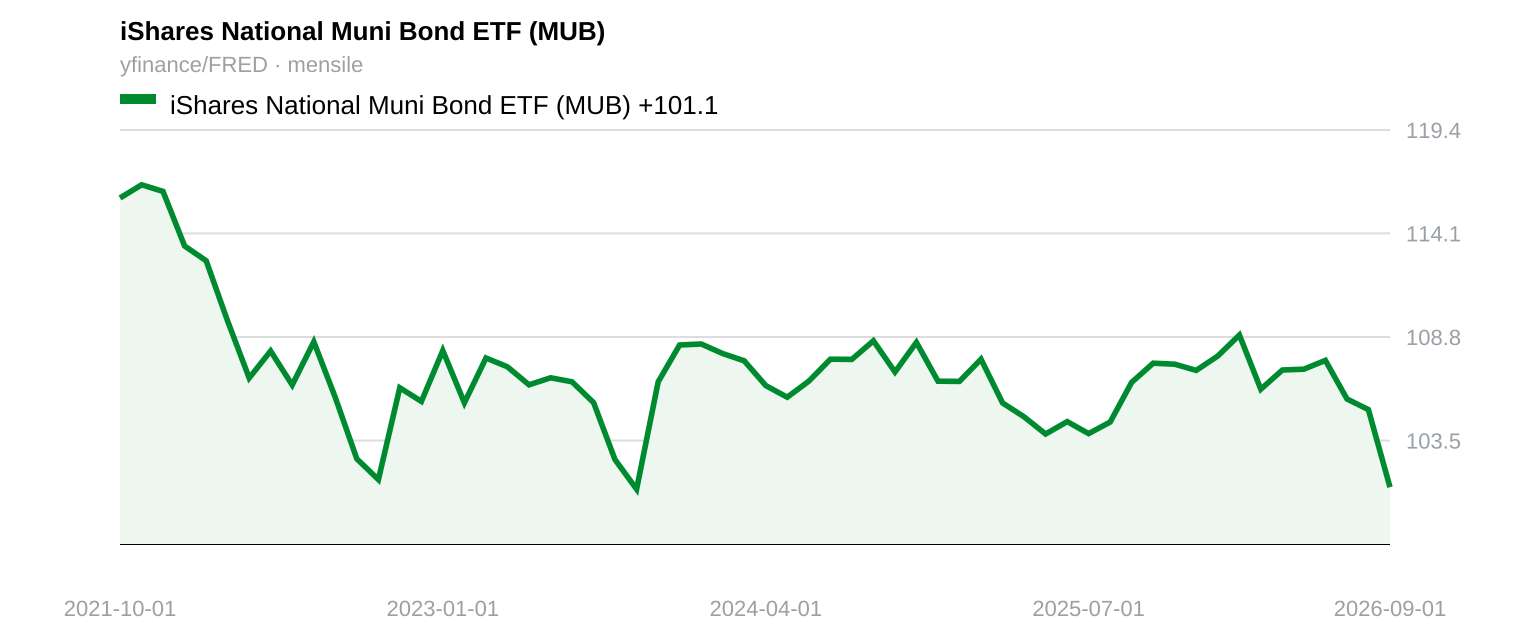
A 5% yield on municipal bonds does not fall from the sky. It comes from selling pressure. When bond prices fall, yields rise, and prices fall when big buyers step back. The Federal Reserve ran down its balance sheet by roughly $2.2 trillion from its 2022 peak, ending quantitative tightening on December 1, 2025. The balance sheet now sits at about $6.74 trillion. China’s reported Treasury holdings fell to $633.4 billion in June 2026, the lowest since September 2008 and roughly half the $1.3 trillion peak of 2013. Foreign official custody holdings at the New York Fed are down about $82 billion since late February, and BNY clients are hedging dollar exposure by the most since 2023. When institutions retreat, prices fall until someone else takes the other side.
That someone is usually the retail investor. Retail investors do not read central bank balance sheets. They read newspapers. In a recent Wall Street Journal op-ed, Burton Malkiel, the economist and author of A Random Walk Down Wall Street, argues that stocks are expensive and future long-run returns will be lower, while high-quality bonds offer unusually attractive yields. He advises retirees to consider adding munis in taxable accounts and TIPS in retirement accounts. The numbers look appealing. The 30-year municipal bond yield hit 5.03% on September 24, the highest since January 2011. Tax-equivalent yields on long-term munis reach 8% to 10% for investors in high-tax states. Long-term TIPS real yields are near 3%. Malkiel acknowledges that rising rates would hurt all bonds, but then presents scenarios in which either financial repression or deficit reduction makes bonds resilient. I do not question his intentions. I question the timing. When the buy recommendation is tailor-made for you, the seller has already found his buyer.
History offers a mirror image. In August 1979, a BusinessWeek cover declared the death of equities after a lost decade for U.S. stocks. Anyone who read it and sold missed the rally that began in 1982. Newspapers explain what just happened. The danger is that readers mistake that explanation for a forecast. The op-ed admits the one risk that can actually cost today’s bond buyer money: rates rise further and bond prices fall. It gives that risk a sentence, then moves on to comforting scenarios. If those scenarios were certain, the institutions stepping back would have bought. They see order flow and run risk models, and they are not in the business of leaving free money on the table for retirees.
No one knows where bond yields go from here. The 5% could turn out to be a bargain. But the timing is worth noticing: the article arrives after institutions have stepped back and yields have risen, not before. Retail money is flowing into muni funds at a record pace. In one week in September, BlackRock’s MUB ETF took in about $1.2 billion and Vanguard’s VTEB drew $1.7 billion, the largest weekly inflows on record for both funds. Muni funds have pulled in roughly $35.9 billion year-to-date.
Whether that retail money is buying exactly what institutions sold is an inference, not a confirmed fact. Either way, the retail investor is left holding the paper, along with a well-written article to reassure him about the future.
References
The Wall Street Journal, 09/23/2026
It’s a Good Time to Buy Bonds
Key takeaways
- Institutional buyers like the Federal Reserve and foreign governments have reduced their bond holdings sharply, pushing yields higher and forcing retail investors to absorb the supply.
- Burton Malkiel's advice that retirees should buy bonds because yields look attractive arrives only after the large institutions have already exited the market.
- Record inflows into retail municipal bond ETFs suggest individual investors are providing the liquidity that institutional sellers no longer want.